


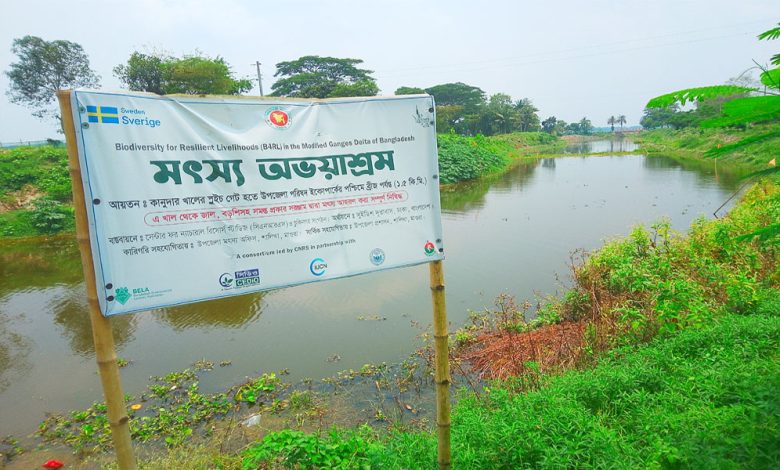

Rokibul Hoque Dipu, Magura: Bio diversity is facing threatening throughout in the Country. But a silent revolution has emerged in Magura by saving bio diversity. Non government organization (CNRS) deserves on this glorious credit.
According to CNRS, the project named Bio diversity for resilient livelihood financed by embassy of Sweden, Dhaka – Bangladesh. We have installed a total of 11 self centers for fishes in Fatki and some other water bodies connected with the river. With a view to ensuring navigability we have excavated 6 km river and 2 km canal. Ultimately breeding and initial Growth of indigenous fishes happen in beal (water body). We have created congenial atmosphere in the beals adjacent to Fatki River. At the same time we have renovated the channel between beals and river by excavation, so that the mature fishes can easily enter into the river from beals. In this way we have become successful to increase the production of many indigenous fishes like Sharfuti , Koi , Baim, Raina and shing. Earlier in absence of this project production of indigenous fishes in this river fell down 70% for 20 years. But now the project has come as a blessing in saving bio diversity , as production of indigenous fishes including some other animals like crab, tortoise and mud eel is taking a positive turn in Fatki river. We are also working to build up consciousness among people over saving bio diversity. We have formed 23 river management committees involving local fisher men. We have also trained up the committee members, so that in absence of this project they can continue this work.
Sreepoti Roy of village kechuadubi under Magura sadar upazila told, Bio diversity for resilient livelihood project has come as a boon for fishermen as well as consumers. We are being benefited from this project as price of indigenous fishes is high in the market. On the other hand, consumers are enjoying taste of indigenous fishes.
On contact district fishery officer Shadhan Kumar Sarkar told , the project is contributing a lot in saving bio diversity in Fatki river. I feel the project is successful to a great extent . If the project continues river Fatki will get back its lost glory over indigenous fishes .
When contacted executive director of CNRS, M Mokhlesur Rahman told, we have received outstanding output from the project . Extension and patronization of this project throughout the country can be fruitful in saving bio diversity including enhancing production of indigenous fishes.


